

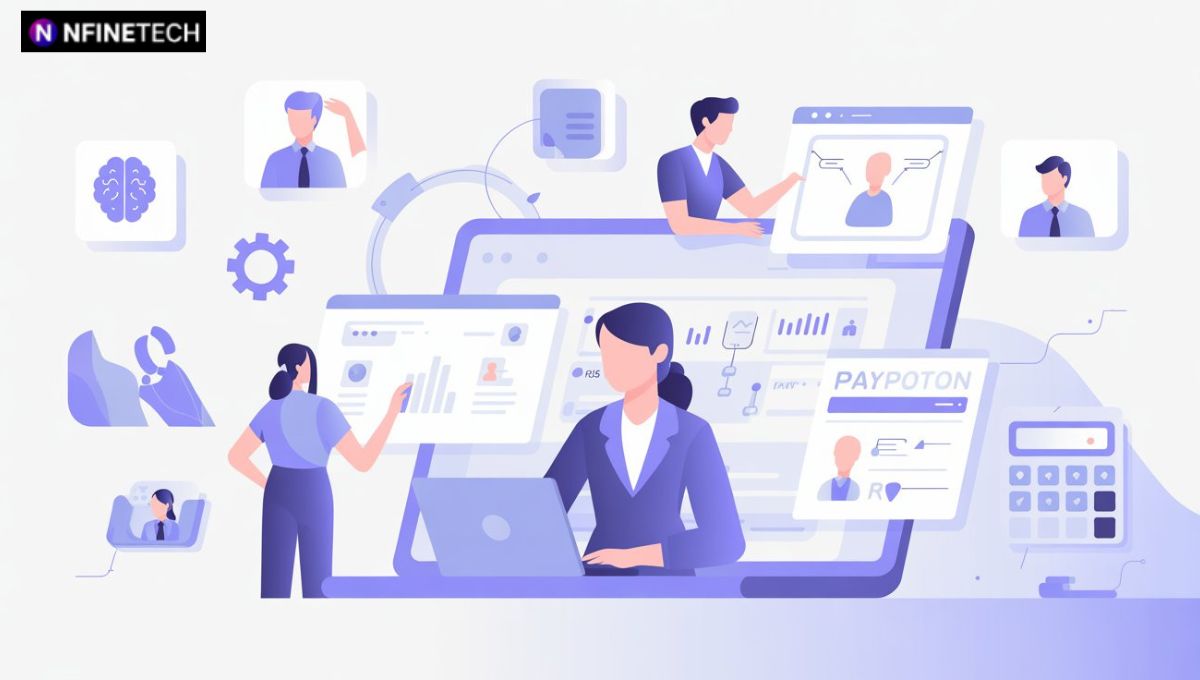
Today, HR teams are facing many growing expectations and are under more pressure than ever. They are expected to hire the onboard employees smoothly, manage payroll correctly, track performance, and still create and deliver a strong and positive employee experience. Handling all of this work manually is no longer very realistic, and this is where HR automation tools efficiently step in to reshape how modern HR functions work and operate.
Instead of replacing the HR automation, it supported them. By reducing repetitive tasks, reducing error, and improving workflow consistency, and because of this automation allows HR teams to focus more on people rather than paperwork.
Rather than just being a one solution, it’s an ecosystem of many smart and suitable systems that work together, like bringing together HR software, AI in HR, and information-backed systems. This approach is widely recognized by numerous organisations and HR providers such as ADP.
Let’s understand it by break it down step by step and see how it works.
What Are HR Automation Tools?
HR automation tools refer to HR software solutions designed and built to simplify routine HR processes by using a structured workflow, rule-based system, and increasingly, AI in HR. Automating repetitive administrative tasks allows HR teams to shift their focus to people management and strategy planning.
Modern HR technology extends beyond basic automation by connecting recruitment automation, onboarding tools, payroll processing tools, attendance tracking automaton and HR analytics into a single structured system.
Many leading and smart platforms also use AI like Agentic AI in talent acquistion support smarter decision-making with faster and more efficient employer support, an approach widely recognized and adopted by enterprise HR providers like ADP.
Important Key HR Processes That Can Be Automated
HR automation that delivers the greatest impact and value when applied to high-impact, repetitive processes.
- Recruitment automation
- Onboarding automation system
- Payroll processing tools
- Attendance tracking automation
- Employee performance tracking software
- Workforce management automation
- Employee self-service portal
- HR chatbot solutions
Each of these areas play an important role in building a scalable HR operation. But the most valuable insights come from people who use these tools every day in their daily work experience. Geminii27, a Reddit user, shares his own practical experience that helps in reduce error and increasing work consistency.
Geminii27, says Changing an employee name or other personal details. Because user IDs should never have anything in them which are linked to any of those details. Use aliases everywhere and keep the back-end userIDs the same regardless of whether Xavier Smith becomes Janet Jones or alters their work location, SSN, or anything else “
Recruitment and Onboarding Automation
The process of hiring and onboarding an employee takes a large amount of time in HR processes. HR automation streamlines both tasks without losing the human touch.
Automating recruitment processes for HR departments makes it easier the task of creating job postings, review resumes, coordinate interviews, and monitor applicants. Many different platforms often use AI in HR to shortlist applicants based on the role requirements to select the most suitable candidates based on their skills and qualifications.
By automating the onboarding process, once a candidate has been hired, anything that needs to be done afterwards, such as collecting necessary paperwork and completing the orientation process gives the employee a new and smooth start.
Common automated onboarding tasks include:
- Document collection and verification
- Role-based task assignments
- Policy acknowledgments
- Training and tool access setup
This strategy increases timeliness and enhances the experience of new hires on their first day, and ensures compliance from the start. The majority of HR Leaders utilize research and the processes of industry leaders such as Gartner and SHRM to create their new Hiring Workflows.
Employee Management Automation
After onboarding, managing employees effectively became very critical and essential.HR automation tolls helps teams reduce manual errors, enhance transparency, and manage people more efficiently at scale.
By connecting payroll access tools, attendance, employee performance tracking software, and workplace planning into a single system, organizations gain better and stronger control with clearer workforce insights through built-in HR analytics. An approach that is widely adopted and well recognized by the organization’s HR platforms, like BambooHR
This merged area typically includes:
- Payroll processing tools for accurate salaries, taxes, and compliance
- Attendance tracking automation f⁹or time and leave management
- Employee performance tracking software for goal setting and reviews
- Workforce management automation for shift planning and capacity control
Automated systems make sure timely payroll, accurate attendance tracking, and support continuous performance feedback, which helps the HR teams to make better evidence based decisions. But sometimes the best and most efficient way to understand HR automation is to hear from these professional users who have used it in there daily life. Below is a firsthand experience shared by a Reddit user
r/automation/ says Over the past year, I’ve automated 73% of my administrative role with my manager’s full knowledge and support. My productivity has increased dramatically, and I’ve been able to take on more strategic work as a result.”
HR Chatbots and Employee Self-Service Portals
One of the biggest and most crucial changes HR software is employee independence.HR chatbot manages and handles routine questions like leave balances, payroll dates, and policy clarifications.
This reduces the HR team’s workload while providing employees instant access to the information. By allowing staff to find answers on their own, these tools also boost work efficiency and improve the overall employee work experience.
Employee self-service portals allow staff to:
- Update personal details
- Download documents
- Apply for leave
- Track attendance and performance
By providing various ways to make using HR technologies easier for employees will also increase employee satisfaction and make it easier for all team members to adopt HR technology. Microsoft is one of the many companies that highlight the role of the self-service system in achieving a successful digital workplace.
A Reddit user is explaining how EZHRM’s Employee Self-Service portal gives employees direct access to information and everyday HR tasks, which help boost work productivity.
u/ezhrm says EZHRM software comes with an ESS or Employee’s self-service portal. What is an ESS? ESS panel is a self-service portal that is a part of the software. It allows your employees to work on various functions of EZHRM. In other words, an ESS portal makes data, information, and documents available to employees, allowing them to access and manage these directly via the Employee Self-Service (ESS) portal without having to contact HR.
Employee Self Service Portal Features-
- Promotes better communication
- Builds a sense of trust
- Transparency is served between employees and the organization
- Promotes employees engagement
Top 5 HR Automation Tools to Know
Below are five widely used HR automation tools that show how HR automation works are listed below, which help to eliminate manual error in the HR process while increasing employee productivity.
1. BambooHR
BambooHR is an user friendly HR platform for small and medium businesses. It stores employee records in one place, which makes it easy to update and report them as well as keep them compliant. Its onboarding tools and self-service portal for employees take care of document collection and training workflows, enabling the new staff to get the resources they need on their own.
Performance monitoring and HR analytics provide insights that can be acted on for instant workforce-related decisions, and time-off management makes absence tracking easier. Customizable workflows allow HR teams to tailor and give HR departments the opportunity to adapt the processes to the company’s policies. Therefore, BambooHR is an ideal solution for those teams that want to combine efficiency and simplicity.
2. Rippling
Rippling offers a combination of HR automation, IT, and payroll in one platform, which is a perfect choice for remote or rapidly growing teams. Automated recruitment and onboarding processes help to monitor candidates and prepare for their first day. Payroll processing system takes care of wages, taxes, and compliance with high precision, while the automation of attendance tracking makes sure that the hours, shifts, and leave records are correct.
Workers can modify their details and apply for time off through self-service portals, and IT connections make account setup automatic. Rippling cooperates with the HR and IT departments in a way that saves time and, at the same time, enhances the employee experience.
3. ADP Workforce Now
ADP Workforce Now is a powerful HR solution that stands out for its precision in payroll and regulatory compliance. Its advanced payroll components render workflows and automatic tax calculations, thereby minimizing the possibility of mistakes. The automation of workforce management includes all the aspects of controlling the workforce, such as the timetable, absence tracking, and allocation of resources.
The supply of HR analytics that are deep enough to influence decision-making around workforce planning is a strategy that is, however, mainly associated with the larger HR platform of ADP. The software also aids in the automation of hiring and training processes while guaranteeing that the HR operations conform to the laws, thus making it suitable for mid-sized to large-scale companies.
4. HiBob (Bob)
HiBob is a modern platform that promotes and maintains the engagement of employees and their performance in modern workplaces. Feedback and goal monitoring are done continuously, thanks to the employee performance tracking software. HR analytics provides managers and executives with the information necessary for proper engagement trend analysis, skill gap identification, and workforce planning.
By offering employee self-service portals, there is less administrative work required to maintain these systems, and flexible dashboards allow managers to identify critical metrics within their organisation with much greater ease. Additionally, HiBob provides organisations with engagement and wellbeing resources to assist in building an engaged and motivated work environment.
5. Gusto
Gusto is the software for small businesses and startups that need a straightforward and automated payroll system. Their payroll features provide the proper amount of payroll taxes due and to whom, as well as providing an automated onboarding process (receiving the necessary documentation for onboarding, and setting up staff on their first day). Gusto also has a chatbot that answers questions quickly, helping to reduce the workload on HR.
In addition, Gusto gives employees the ability to access their benefits and update their salary slip information. Employees can also request leave online and manage their own personal information.
Gusto provides resources for managers for tracking employee performance and ongoing performance appraisals; also providing analytical data to aid in management decisions.
Real-life Example:
A Technology Company that is growing and has at least 120 employees is having trouble with manually managing and calculating employee salaries. New hires often need to wait for days to get system access, and payroll corrections were often frequent.
After adopting recruitment automation, an onboarding automation system, and payroll processing tools company saw onboarding time drop significantly.HR no longer needs to chase the documents manually, payroll became more accurate, and the employees had access to a self-service portal for routine tasks. This allowed and lets the HR teams to shift their focus fully from administration to employee development and planning.
How to Choose the Right HR Automation Tools
Selecting HR automation tools is not only just about the features alone. Below are the points that help you select the best automaton tool.
- Identify your HR pain points
- Understand existing workflows
- Check software compatibility with the current HR system
- Ensure and review Scalability, Flexibility, and Suitability.
- Review data security, compliance, insight-based metrics, and Value
- Measure ROI and long-term value
- Plan training and change management
Well-documented guidance from platforms like Forbes and Harvard Business Review often stresses starting with process clarity before automation. Another Reddit user is sharing their work experience on HR automation tools, which can help us choose the best opt” Depends on what exactly you’re looking for because this tool doesn’t have payroll, for example, which is my biggest issue with it, but everything else is amazing, and I highly recommend it every time. It’s called Teamflect, hope this helps!”
Future Trends in HR Automation
Currently, HR departments require a platform that improves their decision-making and provides value to their employees by providing HR departments with actionable insights. The tools that will continue to be essential in helping HR departments better forecast workforce trends, identify employee skill gaps in their organizations, and support proactive workforce planning are becoming essential.
- AI-driven decision support
MACHINE LEARNING is employed in the process to produce practical information, spot the difficulties that may come up, and support the HR specialists with the most intricate decisions. - Predictive HR analytics
Utilizes past information about an organization’s workforce to create forecasting models to support HR departments in determining future talent criteria for obtaining and performance trends. - Smarter HR chatbot solutions
Provide immediate assistance to employees with common inquiries while allowing HR departments to concentrate on critical strategic initiatives - Deeper workforce management automation
Implemented to improve scheduling efficiency, make the best use of all resources, and provide leaders with accurate capacity forecasts to position the right employee in the right location.
As AI in HR advances, automation is becoming a very helpful strategic partner, not just an administrative tool. It is helping organisations to stay agile and enhance their employees experiences.
Final Recap: Why HR Automation Tools Matter
Rather than being optional, HR Automation Tools are now necessary for a growing organisation. They reduce mistakes, save time, improve employee experience, and help make smarter and better decisions. When it is implemented correctly, HR technology doesn’t replace people; it empowers them.
Finding the appropriate tool, automating the correct processes within the organisation, and afterwards, encouraging team use. This ensures that if you use HR Automation properly, it will become an advantage for many years, rather than merely another tool, and improve the team’s working capability.
